
- Arrest Records
- Judgments
- Bankruptcies
- DUIs & DWIs
- Felonies
- Warrants
- Jail Records
- Lien Records
- Sex Offenses
- Misdemeanors
- Criminal Records
- Federal Dockets
What are Wisconsin Court Records?
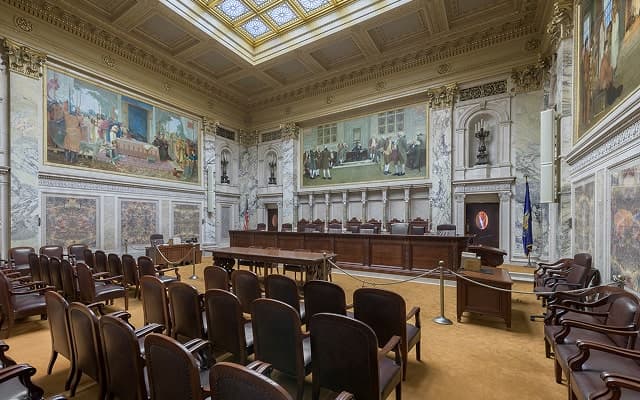
Wisconsin has the 20th largest population among US states with 5.9 million people. The state's judicial system is comprised of the Supreme Court, Court of Appeals, and its trial courts - Circuit Court and Municipal Courts. These courts have either general or limited jurisdiction and handle around 700,000 cases per year.
All official written or recorded papers about a court case, including hearings and trials, are considered court records and may be used as evidence in court. Except in situations where the courts seal them, Wisconsin court records are accessible to the public. A complaint in civil cases or an indictment in criminal cases normally initiates the development of any court record in the state. These court records typically include the following:
Briefs
These are written legal arguments submitted to a court to assist it in deciding on the case's legal concerns.
Case Files/Information
These are a group of records of a certain court case, which may contain case evidence.
Court orders and judgments
Court orders are the judge's decision on a motion, whereas judgments are the court's conclusion, including who won and any related penalties.
Motion
This is an application made by the prosecutor or defense attorney to the court, requesting that the court decide on a certain issue before the start of a trial.
Pleadings
These are written documents that an attorney files in court. It is a formal submission of assertions and refutations of those made by the other side.
Transcripts
These are documents that detail exactly what was said and by whom, either in real-time by a transcriber or via an electronic recording of the proceedings.
Court minutes
These are a detailed account of the proceedings of a trial, hearing, or other legal action that is conducted by the court clerk or another appointed individual. It serves as a formal record of what transpires throughout the proceedings.
Evidence
This refers to important facts and objects, whether tangible or digital, that any side may present in court to support their position.
Dockets
This is a continuous list of the parties involved and the acts taken throughout a court procedure. Beginning with the original complaints and concluding with the final judge's order, it contains all court-submitted documents in a numbered order.
Types of Court Cases
There are two categories of court proceedings, civil and criminal. Despite their many similarities, the primary distinction between a criminal and civil case is that the former entails jail time if found guilty, while the latter typically entails monetary compensation for damages. Additionally, there are the required standards of proof. In terms of parties involved, a criminal case involves someone being prosecuted by the government, whereas a civil case involves two or more parties, with one side seeking restitution or a court order against the other.
Civil Cases
Civil litigations aim to resolve disputes amongst citizens. One of the key characteristics of civil proceedings is that they do not involve jail time or other severe rights breaches. As a result, the burden of proof, the quantity of evidence needed to substantiate a claim, is significantly lower than in criminal proceedings.
A civil attorney's burden of proof is the "preponderance of the evidence". This suggests that the jury or judge would side with the one with the most compelling evidence. A unanimous verdict, which is reached when all jurors agree on the verdict and the conclusion of the case, is not necessary in a civil judgment.
The purpose of civil verdicts is to provide the winner with relief, compensation for losses, or a sense of justice, especially when a criminal prosecution has failed. Reimbursing parties, stopping particular behaviors, or addressing the underlying cause of the conflict are some examples of the result of a civil case. Additionally, in a civil action, there is no legal right to legal representation. Civil parties must either appear in court on their behalf (pro se) or hire their lawyers.
Criminal Cases
Criminal prosecutions are started by a government agency, commonly known as the State. The State charges criminals who are suspected of committing crimes. The main objectives of a criminal case are to remove or rehabilitate offenders from society and deter future criminal activity.
The case is often brought against the defendant by the local district attorney's office on behalf of the State. Defendants in criminal cases are entitled to a trial by their fellow jurors. A random sample of district residents is used by the court to select the jury, and each juror is questioned to eliminate any potential bias. Defendants may choose a bench trial without a jury as an alternative if the State agrees.
Jurors in criminal cases are required to vote unanimously, in contrast to juries in civil trials. This means that they must all agree on the verdict and outcome of the court case. Unanimity is required because of the much harsher consequences in a criminal case. Therefore, jurors must be completely confident that the prisoner is "guilty beyond a reasonable doubt". A guilty verdict can result in jail time, probation, another type of supervised release, or all of these.
The State, not the person who was wronged, gets the money if a fine is imposed. However, in some situations, the judge may also mandate that the perpetrator reimburse the victim for any harm the offense may have caused.
What Are the Different Courts in Wisconsin?
Wisconsin's court system has a seven-justice Supreme Court, a 16-judge Court of Appeals, and trial courts made up of circuit courts and municipal courts. The court system's state budget is an estimated ~$200 million a year. The court system's state budget is an estimated ~$200 million a year.
| Court Level | Court Name | Jurisdiction | Key Functions |
|---|---|---|---|
| Appellate | Wisconsin Supreme Court | Statewide; appellate jurisdiction over all Wisconsin courts, plus original actions | Chooses which cases to hear and has administrative and regulatory authority over all courts and attorneys. |
| Appellate | Wisconsin Court of Appeals | Statewide, organized in four districts | Reviews circuit court decisions; sits in Madison, Waukesha, Wausau and Milwaukee. |
| General Jurisdiction | Circuit Courts | All civil and criminal cases, including traffic, juvenile and probate matters | Primary trial courts with 261 judges across the state; hold civil and criminal jury trials. |
| Limited Jurisdiction | Municipal Courts | Parking, traffic and local code violations | Handle ordinance cases, including first-offense OWI and juvenile issues such as curfew and truancy. |
How Many Federal Courts Are In Wisconsin?
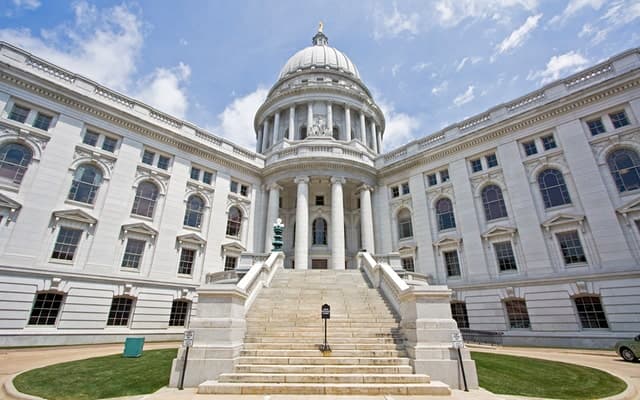
There are two federal district courts in Wisconsin, namely the US District Court Eastern District of Wisconsin and the US District Court Western District of Wisconsin. The Eastern District covers the Milwaukee and Green Bay Divisions on the eastern part of the state while the Western District covers the western part of Wisconsin including Vilas, Oneida, Lincoln, Marathon, Portage, Adams, Columbia, Jefferson, and Rock.
Federal district court judges are appointed to their positions by the President of the United States and confirmed by the Senate. Their tenure is for life. The Eastern District is manned by Chief Judge Pamela Pepper, assisted by five district judges and five magistrate judges. The Western District is headed by Chief U.S. District Judge James D. Peterson and assisted by a district judge and three magistrate judges. Appeals from these courts are handled by the U.S. Court of Appeals for the 7th Circuit.
You may use PACER, a web-based system that offers access to electronic federal case dockets and filings at a per-page price set by the Judicial Conference of the United States, to access the court's documents online.
How Many Court Cases Are Filed Each Year in Wisconsin?
Wisconsin circuit courts receive an estimated ~680,000 new cases a year, with traffic forfeitures the largest group and an overall clearance rate near 100%.
| Case Type | Annual Filings | % of Total | Common Offense/Subtype | Clearance Rate |
|---|---|---|---|---|
| Traffic | ~290,000 | ~42.6% | Speeding and traffic forfeitures, OWI, operating violations | ~100% |
| Criminal | ~100,000 | ~14.7% | Misdemeanors and felonies, OWI, drug and theft offenses | ~100% |
| Civil | ~60,000 | ~8.8% | Contract, foreclosure, tort and collections cases | ~100% |
| Small Claims | ~75,000 | ~11.0% | Evictions and money claims up to $10,000 | ~100% |
| Domestic Relations | ~33,000 | ~4.9% | Divorce, custody, support and paternity | ~100% |
| Juvenile | ~14,000 | ~2.1% | Delinquency, child protection and juvenile in need of protection | ~100% |
| Other | ~108,000 | ~15.9% | Probate, guardianship, mental commitments and ordinance forfeitures | ~100% |
| Total | ~680,000 | ~100% | — | ~100% |
How Do I Look Up Court Cases in Wisconsin?
In Wisconsin, case files, pleadings, judgments, court orders, motions, and other papers about civil, criminal, family, probate, and juvenile matters are generally considered public court records. Documents and information about court cases and processes in Wisconsin are kept up to date by the Wisconsin Circuit Court System.
The public can physically view court records at the county court clerk's office where the case was filed. You may also visit the Wisconsin Circuit Court Access (WCCA) platform to get access to court information and records. You can search for Supreme Court, Court of Appeals, and Circuit Court cases using this platform.
Number of Active Judges — State & Federal
Wisconsin's state judges are chosen in nonpartisan elections, while federal district judges are nominated by the president and confirmed by the U.S. Senate. Circuit and municipal court counts are approximate.
| Court | Jurisdiction | Active Judges | Selection Method |
|---|---|---|---|
| Wisconsin Supreme Court | Statewide appellate | 7 | Nonpartisan statewide election, 10-year term |
| Wisconsin Court of Appeals | Statewide intermediate appellate (four districts) | 16 | Nonpartisan election, 6-year term |
| Circuit Courts | General jurisdiction trial courts (72 counties) | ~250 | Nonpartisan election, 6-year term |
| Municipal Courts | Limited jurisdiction (local ordinances, traffic) | ~220 | Elected or appointed by the municipality, up to 4-year term |
| U.S. District Court, Eastern District of Wisconsin | Federal trial court | ~5 | Nominated by the President, confirmed by the Senate, life tenure |
| U.S. District Court, Western District of Wisconsin | Federal trial court | ~2 | Nominated by the President, confirmed by the Senate, life tenure |
| Total Active Judges | — | ~500 | — |
What Court Records Are Not Available to the Public in Wisconsin?
The public can view most Wisconsin court records. However, confidential information, juvenile records, sealed or expunged records, and some court records may be restricted to the public until specific events in the court cause them to become open records. For example, records may be opened when determining paternity, or when a search warrant is confidential until the warrant is executed.
Conversely, certain court participants may also be asked to have their records sealed by the judge; however, they must provide valid reasons, such as preserving their safety or concealing their financial records.
Average Case Processing Time & Clearance Rates
Processing time in Wisconsin varies by case type, from a few weeks for forfeiture and small claims matters to a year or more for contested civil and felony cases. The values below are estimates based on typical dispositions.
| Case Type | Court Level | Average Processing Time | Description | Clearance Rate |
|---|---|---|---|---|
| Traffic & Parking | Limited Jurisdiction | ~30–60 days | Most infractions are resolved by payment of a fine, a deferral or a short hearing before a judge or magistrate. | ~100% |
| Small Claims | Limited Jurisdiction | ~30–60 days | Informal hearings on small money disputes, usually decided at a single hearing or by default or settlement. | ~100% |
| Misdemeanor Criminal | Limited Jurisdiction | ~90–180 days | Most cases end in a guilty plea or dismissal after arraignment and a pretrial conference; few go to trial. | ~100% |
| Civil Cases | General Jurisdiction | ~9–18 months | Cases move through pleadings and discovery; most settle or are dismissed before trial. | ~100% |
| Domestic Relations | General Jurisdiction | ~6–12 months | Divorce and custody cases are mostly settled by agreement or mediation; contested cases need a final hearing. | ~100% |
| Felony Criminal | General Jurisdiction | ~6–10 months | Cases begin in a preliminary stage and mostly end in plea agreements; a small share go to jury trial. | ~100% |